Tax Benefits for Landlords in Florida: What You Need to Know
The specific federal and Florida tax benefits available to Palm Beach County rental property owners — depreciation, deductions, 1031 exchanges, and the strategies that maximize after-tax returns.
The Florida Tax Advantage for Rental Property Owners
Florida has no state income tax. This is not just a lifestyle benefit for Palm Beach County residents — it is a meaningful structural advantage for rental property investors. In states with significant income taxes (California: 13.3%, New York: 10.9%, Massachusetts: 5%), rental income is subject to state taxation that materially reduces after-tax returns. Florida rental income is subject only to federal taxation, which produces after-tax returns that are 5-13% higher than comparable investments in high-tax states, all else equal.
For a Palm Beach County landlord earning $33,600/year in gross rental income from a $2,800/month property and at a 25% federal income tax rate, the absence of Florida state income tax saves approximately $1,680-$4,500/year in state taxes that a comparable investor in New York or California would pay. Over a 10-year holding period, this amounts to $16,800-$45,000 in additional after-tax return from the same investment.
Federal Depreciation: The Most Powerful Rental Tax Benefit
Residential rental properties are eligible for depreciation deductions under the IRS's 27.5-year Modified Accelerated Cost Recovery System (MACRS). Depreciation allows landlords to deduct the cost of the building (not land) over 27.5 years as a non-cash expense against rental income. For a $550,000 Palm Beach County single-family rental with a land value of $100,000 (building value $450,000), the annual depreciation deduction is $450,000 / 27.5 = $16,364/year.
This $16,364 annual depreciation deduction reduces taxable rental income by $16,364 regardless of whether the property actually deteriorates. For a landlord in the 25% federal bracket, this produces annual tax savings of approximately $4,091/year ($16,364 x 25%). Over a 10-year holding period: $40,910 in cumulative tax savings from depreciation alone, in addition to all other deductible expenses.
Important caveat: when a rental property is sold, the IRS requires "depreciation recapture" at a 25% federal rate on all depreciation previously deducted. Strategic use of 1031 exchanges can defer both capital gains and depreciation recapture indefinitely. Consult a CPA experienced in rental real estate for your specific situation.
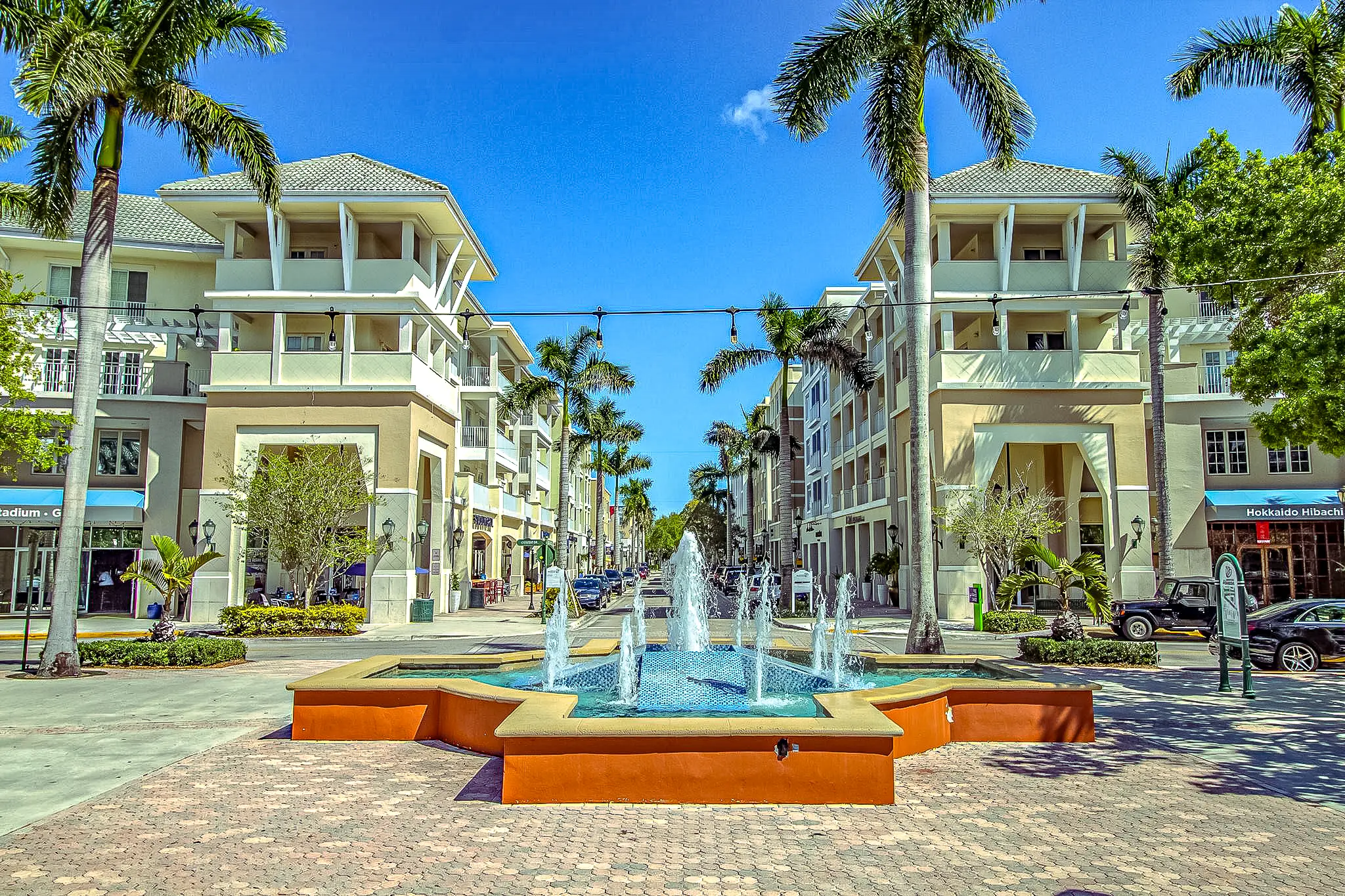
Hyperlocal Spotlight: SoSo (South of Southern), West Palm Beach
SoSo (South of Southern) in West Palm Beach represents one of the most active rental submarkets in Palm Beach County for the specific considerations covered in this guide. Current rental rates in SoSo (South of Southern) range from $2,600–3,600/month for single-family and townhome inventory, with demand driven primarily by corporate transferees, dual-income households, and long-term residents seeking stability in a well-maintained community.
Landlords operating in SoSo (South of Southern) face the full complexity of West Palm Beach's rental environment: HOA compliance requirements, a tenant pool with above-average income and expectation standards, and seasonal demand variation that rewards landlords who price accurately and market professionally. Atlis currently manages properties throughout SoSo (South of Southern) and the broader West Palm Beach submarket, with an average days-to-lease of under 21 days for properly prepared and priced units. Owners in this community who contact Atlis receive a no-obligation rental analysis specific to SoSo (South of Southern) market conditions — not a county-wide estimate.
Fully Deductible Operating Expenses
Every ordinary and necessary expense incurred in the operation of a Palm Beach County rental property is deductible against rental income on Schedule E of the federal return. Deductible expenses include: property management fees (fully deductible in the year paid); landlord insurance premiums; property taxes; mortgage interest; maintenance and repair costs; professional photography and advertising expenses; legal and accounting fees attributable to the rental; HOA dues; travel to the property for management, inspection, or repair (at the IRS standard mileage rate or actual expenses); and home office expenses if a dedicated space is used exclusively for rental business.
The most commonly missed deductions for Palm Beach County rental owners: vehicle mileage for all property-related travel (at $0.67/mile for 2024); professional fees paid to attorneys or CPAs for rental property matters; subscriptions to property management software or rental market data services; and education expenses directly related to improving rental management skills. These small deductions cumulatively add $500-$2,000/year for an active landlord who tracks them systematically.
Maintenance Cost Reality: What Palm Beach County Landlords Actually Spend
Maintenance budgets built on national averages consistently under-fund Palm Beach County properties. Florida's climate, coastal exposure, and older housing stock create specific cost drivers that landlords must plan for accurately.
Exterior paint cycle (coastal SFH)
Pool maintenance (monthly, where applicable)
Roof inspection + minor repairs (annual)
Total annual maintenance budget (% gross rent)
Every 5–6 yrs
$140–$220/mo
$380–$620
10–13%
Every 7–9 yrs
$80–$140/mo
$200–$400
7–9%
Salt air and UV accelerate finish degradation
Chemical demand higher in South Florida heat
Wind-event exposure requires more frequent inspection
Palm Beach County properties require a larger reserve
The 1031 Exchange: Deferring Capital Gains Indefinitely
Section 1031 of the Internal Revenue Code allows Palm Beach County rental property owners to defer capital gains taxes by reinvesting the proceeds from a property sale into a "like-kind" replacement property of equal or greater value. The rules: the replacement property must be identified within 45 days of the sale closing; the exchange must be completed (replacement property closed) within 180 days; and the exchange must be facilitated by a qualified intermediary who holds the sale proceeds during the exchange period.
The 1031 exchange's power: a Jupiter rental property purchased in 2015 for $280,000 and sold in 2025 for $580,000 has a $300,000 capital gain (before depreciation recapture). Without a 1031 exchange, the federal capital gains tax on this gain (at 15-20% for most investors, plus the 3.8% Net Investment Income Tax for high-income investors) produces a tax bill of $56,400-$71,820. With a properly structured 1031 exchange into a qualifying replacement property, this entire tax liability is deferred.
The tax benefit that most surprises new Palm Beach County rental owners is the scale of the depreciation deduction. A landlord who owns a $550,000 Jupiter home that generates $3,000/month ($36,000/year) in gross rent and has $20,000 in operating expenses has $16,000 in net rental income before depreciation. The $16,364 in annual depreciation deduction fully offsets this net income, resulting in zero federal taxable income from the property in the year. The property generated $16,000 in real cash income that is not taxed in the current year. That is a meaningful structural tax advantage that most stock market investments cannot replicate.
Landlord Scenario: A Real Palm Beach County Owner's Experience
The situation: A corporate relocation landlord owned a 4-bedroom single-family home in Avenir. She was transferred overseas and needed professional management immediately. The result: allowed a tenant to make unauthorized modifications — painting three rooms and installing a pet door — which cost $2,900 to restore at move-out, none of which was recoverable without a prohibition clause.
What changed: After engaging Atlis Property Management, the team added Atlis's alteration prohibition addendum to all future leases. The property was brought into compliance with current market standards and operational best practices within 30 days of onboarding.
The outcome: The owner enforced a chargeback for $1,600 in unauthorized alterations at the following move-out, fully supported by the lease language. The management fee paid for itself within the first lease term, and the owner has since retained Atlis for two additional properties in her portfolio.
Florida Rental Tax Benefit Mistakes
Every mile driven to a rental property for management, maintenance coordination, inspection, or leasing activity is deductible at the IRS standard mileage rate. Owners who do not track mileage lose $400-$1,000/year in legitimate deductions. A mileage tracking app (MileIQ, Everlance, or others) takes 30 seconds per trip and captures every deductible mile automatically.
Rental real estate taxation has specific rules — depreciation, passive activity loss limitations, the qualified business income deduction (Section 199A), and 1031 exchange mechanics — that general accountants may not be current on. A CPA who specializes in real estate investment typically recovers their fee many times over in optimized tax positions.
Depreciation recapture at 25% federal rate applies to all depreciation previously deducted when a rental property is sold. An owner who has deducted $100,000 in depreciation over 10 years faces a $25,000 depreciation recapture tax at sale, in addition to any capital gains tax. Planning for this with a 1031 exchange strategy well before the intended sale date produces better outcomes than discovering the liability at closing.
Florida Rental Tax Benefit Questions
Get a Custom Quote for Your Palm Beach County Rental Property
No pressure, no obligation. Jean Taveras will walk you through exactly what Atlis management would cost and return for your specific property.
Call 561.473.3664Email info@atlispm.com