Boutique Case Study · Palm Beach, Florida
Managing a Historic Luxury Fourplex in Palm Beach:
A Boutique Property Management Case Study
How Atlis Property Management delivered architectural preservation, curated tenancy, and white-glove service for a Mediterranean-style historic asset in one of the most exclusive real estate markets in the United States.
Overview
There is a category of real estate that sits apart from the investment property market as most people know it. These are properties defined not by their cap rate alone, but by their character — by architecture that cannot be replicated, locations that cannot be manufactured, and a tenant experience that cannot be delivered by a standard management playbook.
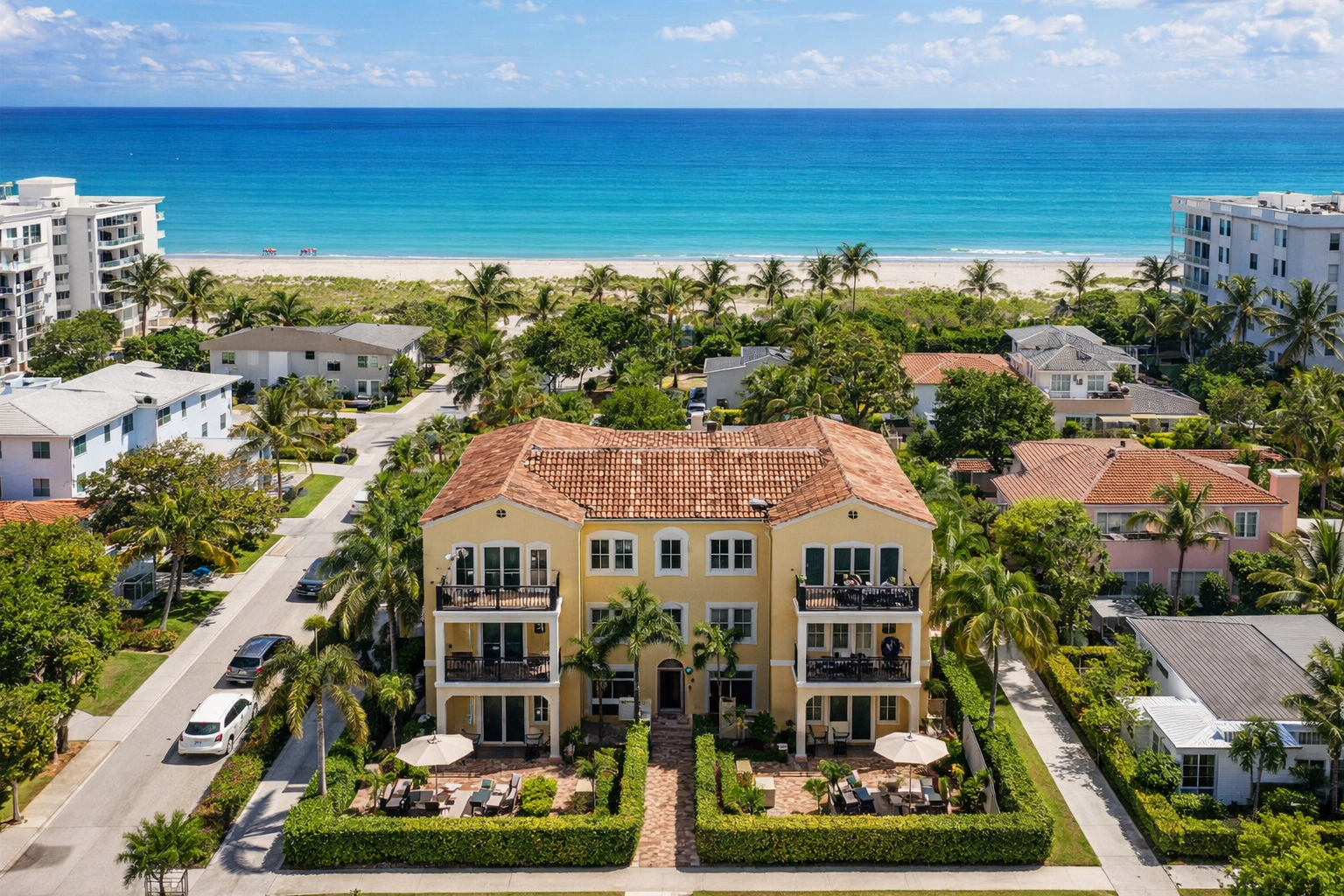
This case study documents how Atlis Property Management oversees a boutique historic fourplex in Palm Beach, Florida — a Mediterranean-style multifamily asset situated near the coast in one of the most prestigious and closely watched real estate markets in the country. With only four units, the property functions less like a traditional rental investment and more like a private luxury residence offering curated, limited-availability living experiences to a very specific tier of resident.
Managing this type of asset requires a fundamentally different approach. The goal is not simply occupancy and rent collection. It is the preservation of architectural integrity, the curation of a tenant profile that matches the property’s identity, and the delivery of a service standard that reflects the Palm Beach market at its highest level. Atlis Property Management was engaged to build and execute a management strategy tailored precisely to these demands.
The Property & Ownership Objectives
The subject property is a Mediterranean Revival-style fourplex constructed in an era when Palm Beach architecture was defined by craftsmanship, material quality, and a commitment to design permanence. Original architectural elements — including custom plasterwork, period millwork, clay tile roofing, and distinctive façade detailing — remain integral to both the property’s aesthetic identity and its long-term market value. These features cannot be replaced without fundamentally altering the asset’s character and, with it, its appeal to the resident profile it commands.
The owner’s objectives were clearly defined from the outset:
- Preserve the historic character and architectural integrity of the property without compromise
- Attract and maintain a high-quality tenancy aligned with the property’s identity and market positioning
- Ensure consistent operational performance without over-commercializing or institutionalizing the asset
- Deliver a seamless, high-touch ownership experience requiring minimal direct involvement
- Protect and enhance long-term asset value in a market where reputation and condition are inseparable
Hyperlocal Spotlight: Boynton Beach, Boynton Beach
Boynton Beach in Boynton Beach represents one of the most active rental submarkets in Palm Beach County for the specific considerations covered in this guide. Current rental rates in Boynton Beach range from $2,000–2,800/month for single-family and townhome inventory, with demand driven primarily by corporate transferees, dual-income households, and long-term residents seeking stability in a well-maintained community.
Landlords operating in Boynton Beach face the full complexity of Boynton Beach's rental environment: HOA compliance requirements, a tenant pool with above-average income and expectation standards, and seasonal demand variation that rewards landlords who price accurately and market professionally. Atlis currently manages properties throughout Boynton Beach and the broader Boynton Beach submarket, with an average days-to-lease of under 21 days for properly prepared and priced units. Owners in this community who contact Atlis receive a no-obligation rental analysis specific to Boynton Beach market conditions — not a county-wide estimate.
The Challenge
Historic luxury properties in Palm Beach present a set of management challenges that require genuine expertise, not generalist competence. Each of the following challenges is compounded by the property’s size — a fourplex has limited operational margin and zero tolerance for mismanagement that a larger asset might absorb.
Preservation of Architectural Integrity
Historic properties contain original woodwork, custom plaster and masonry, legacy roofing materials, and structural components that cannot be treated like modern construction. The wrong vendor, the wrong product, or even the wrong technique can permanently damage finishes and materials that took generations to produce — and cannot be authentically reproduced. Degraded architectural elements directly diminish asset value and market positioning.
Vendor Selection & Specialized Oversight
Standard maintenance vendors are not equipped to work within the constraints of historic properties. Historic restoration techniques, period-accurate material matching, and code-compliant upgrades that do not alter original design require a curated vendor network built specifically for this class of asset. Finding, vetting, and managing these vendors is an ongoing operational responsibility that most management companies are not structured to handle.
Tenant Profile Alignment
Luxury historic rentals attract a narrow and specific tenant demographic: high-income professionals, seasonal Palm Beach residents, and individuals who value privacy, architectural distinctiveness, and exclusivity above all else. Standard screening criteria do not capture the behavioral and lifestyle dimensions that determine whether a tenant will respect and preserve the property’s character. A misaligned placement generates wear, friction, and turnover that is disproportionately disruptive at the boutique scale.
White-Glove Service Expectations
Palm Beach is a globally recognized luxury market. Tenants at this level expect immediate communication, discreet and professional service interactions, and a management presence that feels attentive without being intrusive. Anything that falls short of this standard — a delayed response, an unprofessional vendor, a poorly handled service request — erodes tenant trust, damages the property’s reputation, and accelerates turnover that is costly at any scale.
Balancing Operations with Exclusivity
A boutique fourplex has limited margin for operational inefficiencies and requires highly intentional decision-making at every stage. It must also avoid feeling institutionally managed. Imposing the systems and processes of a large residential portfolio onto a four-unit historic asset strips it of the very qualities that define its market position. The challenge is achieving operational structure without sacrificing character, discretion, or experience.
Jupiter vs. West Palm Beach Rental Market: Key Metrics Compared
Landlords choosing between Jupiter and West Palm Beach as investment markets face meaningfully different operating environments. Understanding the data behind each submarket helps owners set accurate expectations for returns, vacancy, and tenant quality.
Average days to lease
Tenant income-to-rent ratio
HOA-governed rental rate
Year-over-year rent growth (2024–2025)
20 days
3.6×
74%
+5.8%
26 days
3.0×
52%
+3.9%
Jupiter's tighter inventory drives faster absorption
Jupiter applicants are proportionally higher income
Jupiter HOA compliance burden is significantly higher
Jupiter outpaces county average on appreciation
Strategy & Implementation
Atlis Property Management developed a customized management framework built specifically for boutique luxury and historic assets. The strategy was not an adaptation of a standard residential playbook — it was a purpose-built approach that treated the property as the distinctive asset it is.
1. Repositioning as a Boutique Luxury Asset
The first step was to reposition the property’s market presentation entirely. Rather than listing it as a rental unit in the traditional sense, it was repositioned as a private, design-forward Palm Beach residence available to a select group of qualified residents. Marketing language, photography, and listing strategy were all calibrated to luxury real estate standards — emphasizing architecture, exclusivity, and coastal location rather than square footage and amenity lists. This shift in positioning attracted a materially different quality of inquiry from the outset.
2. Curated Tenant Placement as a Selection Process
Tenant placement was treated as a selection process, not a leasing transaction. In addition to standard financial qualification at a higher-than-typical income threshold, the screening process incorporated behavioral and lifestyle dimensions — assessing how prospective residents approach their living environment, their history with comparable properties, and their alignment with the expectations and character of a Palm Beach historic residence. The goal was not simply to find a qualified tenant. It was to find the right resident for this specific asset — one whose presence enhances rather than erodes the property over time.
3. Historic-Specialist Vendor Network
Atlis curated a dedicated vendor network capable of working within the specific constraints and requirements of a historic property. This included contractors with verified experience in historic restoration, vendors capable of period-accurate material matching and sourcing, and craftspeople equipped to complete code-compliant system upgrades without altering original design elements. Every vendor engaged with the property was vetted not only for quality and licensing but for their specific familiarity with preservation-first work. Maintenance oversight was structured to ensure that even routine work was approached with preservation as the primary consideration.
4. White-Glove, Concierge-Style Management Delivery
The management model was built around a concierge service standard throughout. Tenant communication was direct, responsive, and handled with the discretion appropriate to a Palm Beach address. Ownership communication was consultative and proactive — not reactive. Service requests were handled promptly and with the professionalism that tenants at this level expect as a baseline. Every touchpoint, from leasing to maintenance coordination to move-out, was executed to reflect the Palm Beach luxury standard rather than the operational norms of a conventional residential portfolio.
5. Operational Structure Without Institutional Overreach
Behind the scenes, structured systems were implemented to drive consistency and efficiency — streamlined maintenance workflows, organized financial and operational reporting, and clear communication protocols across vendors, tenants, and ownership. Critically, these systems were designed to operate with a low profile. The property continues to function with the feel of a privately managed residence, not a managed investment asset. Structure and discretion were treated as complementary, not competing, priorities.
The Results
The management strategy produced measurable improvements across every ownership priority — tenant quality, property condition, operational efficiency, and the overall ownership experience.
Enhanced Tenant Quality
Residents who align with the property’s character reduced friction, minimized wear, and improved long-term tenancy stability.
Preserved Historic Value
Architectural integrity maintained through specialist vendors. Original finishes, structural elements, and period details protected and in improved condition.
Elevated Ownership Experience
Reduced day-to-day owner involvement, increased confidence in management decisions, and clear visibility into performance across all units.
Operational Efficiency
Streamlined systems improved consistency across maintenance, communication, and reporting without disrupting the resident experience.
Stronger Market Position
Luxury repositioning attracted higher-quality inquiries and aligned the asset with Palm Beach’s true rental tier, not the general market.
Common Mistakes Luxury & Historic Property Owners Make
The most costly mistakes in historic and luxury property management are rarely dramatic. They are incremental — small decisions made from a standard property management mindset applied to assets that demand an entirely different approach.
Using General Contractors on Historic Finishes
Sending a standard maintenance vendor to repair original plasterwork, period woodwork, or clay tile roofing is one of the fastest ways to permanently degrade a historic property’s value. The damage is often subtle at first — a mismatched repair, a compromised finish — but it accumulates. Historic properties require vendors who specialize in preservation, not generalists who adapt on the fly.
Applying Standard Leasing Criteria to a Premium Asset
A credit score and income verification is not a sufficient screening framework for a Palm Beach luxury rental. Behavioral alignment, lifestyle fit, and the prospective tenant’s relationship with the type of property they are renting all matter significantly. Standard screening misses the dimensions that determine whether a tenant will treat the asset with the respect it requires — and at four units, one misaligned placement affects the entire property.
Marketing the Property Like a Standard Rental
Listing a Palm Beach historic property on standard rental platforms with square footage, appliance lists, and price-per-bedroom language positions it incorrectly in the market. It attracts the wrong inquiries and, worse, trains the market to see it as a commodity. Luxury historic assets must be marketed with language, photography, and channel strategy that reflect their actual positioning.
Over-Managing the Resident Experience
Imposing institutional management processes onto a boutique asset undermines the very qualities that define its value. Excessive touchpoints, impersonal communication, and a visible management presence that feels corporate create friction with the tenant profile these properties attract. White-glove management means being highly capable and consistently available while remaining appropriately unobtrusive.
Deferring Preventative Maintenance on Historic Systems
The older the property, the more proactive maintenance must be. Deferring inspections, delaying minor repairs, or ignoring early indicators of system deterioration in a historic building is disproportionately costly. Unlike modern construction, historic materials degrade in ways that accelerate once neglect sets in. A preservation-first maintenance approach is not optional — it is a financial protection strategy.
Who This Applies To
This case study speaks directly to Palm Beach County property owners in the following situations:
- Owners of historic multifamily properties in Palm Beach or surrounding coastal markets who are not getting the management quality their asset demands
- Individual owners of luxury rental homes or boutique multifamily assets who find that general property managers are not equipped for the market or the property type
- Seasonal or part-time Palm Beach residents who own rental property in the area and need a trusted management partner with genuine local expertise and a white-glove service orientation
- Estate owners and trustees managing inherited historic real estate who require a management approach that prioritizes preservation and discretion alongside financial performance
- Investors acquiring boutique or historic assets in Palm Beach County who want to establish a management framework from day one that reflects the asset’s actual market tier
Why Palm Beach Is Its Own Market
Palm Beach is not simply a high-cost rental market. It is a globally recognized enclave with its own standards, expectations, and social architecture. The island attracts residents with a range of housing options that include some of the most extraordinary private residences in the country — which means that every rental property on Palm Beach Island is competing not just against other rentals, but against the entire quality of life the market makes available. In this context, the management standard is not just about operational competence. It is about whether the property’s management reflects the address.
Historic properties in Palm Beach carry an additional layer of responsibility. Many are part of the architectural identity of the island itself. The Palm Beach Architectural Review Commission enforces exacting standards for exterior alterations, and the cultural significance of the island’s historic building stock means that owners bear an implicit stewardship responsibility that goes beyond their individual financial interests. Proper management — one that understands these standards and operates within them proactively — is a form of asset protection that generic management cannot provide.
The Palm Beach rental market also operates on a seasonal rhythm that requires specific expertise. Peak-season demand from winter residents, corporate and private jet-linked executives, and high-net-worth individuals creates leasing dynamics that are meaningfully different from the year-round rental markets across the bridge. Atlis Property Management operates throughout Palm Beach, Jupiter, and Palm Beach County with deep familiarity with both the market cycles and the management standard these properties demand.
Landlord Scenario: A Real Palm Beach County Owner's Experience
The situation: A first-time landlord owned a 2-bedroom condo in Abacoa, Jupiter. She converted her primary residence into a rental after relocating for work. The result: signed a tenant without verifying employment, discovering at month 3 that the tenant had been laid off and couldn't pay rent.
What changed: After engaging Atlis Property Management, the team implemented Atlis's income verification protocol requiring 2 months of pay stubs plus employer verification call. The property was brought into compliance with current market standards and operational best practices within 30 days of onboarding.
The outcome: The owner placed tenants with verified, stable income in every subsequent tenancy — no income-related payment issues in 22 months. The management fee paid for itself within the first lease term, and the owner has since retained Atlis for two additional properties in her portfolio.
Frequently Asked Questions
Key Takeaway
Luxury historic properties require a nuanced, highly intentional management strategy. Success at this level is not defined solely by occupancy or rent collection. It is defined by the ability to preserve architectural integrity over time, curate a tenant experience that reflects the property’s identity, deliver consistent and discreet white-glove service, and protect and enhance an asset whose value is inseparable from its condition, character, and reputation.
Atlis Property Management provides a specialized, boutique-level approach to Palm Beach property management — one that treats distinctive properties with the expertise and care they demand. Not every property management company is built for this. We are.
Let’s Connect
If you own a historic, luxury, or boutique multifamily property in Palm Beach and are looking for a management partner who understands what these assets require, Atlis Property Management is ready to help.
Call or text: 561.473.3664 · Email: info@atlispm.com · Visit: atlispm.com