55-Unit Multifamily Stabilization · Oakland Park, Florida
Stabilizing a Distressed 55-Unit Multifamily Asset:
A Full-Property Turnaround Case Study
How Atlis Property Management took a high-turnover, delinquency-plagued, maintenance-backlogged Oakland Park multifamily property and transformed it into a stable, professionally managed asset with 97% occupancy and a community that actually works.
15%→3%
Vacancy Rate
95%
Renewals with Rent Increases
<48hr
Maintenance Response
30
Days to Clear Backlog
Overview
There is a category of multifamily management engagement that goes beyond optimization. It is not about fine-tuning an already functional operation or improving the margins on a property that is performing adequately. It is a full stabilization — taking a property in genuine operational distress and rebuilding it from the ground up: its systems, its culture, its financial performance, and the experience of the people who live there.
This case study documents exactly that kind of engagement. A 55-unit multifamily property in Oakland Park, Florida arrived at Atlis Property Management with a 15% vacancy rate, persistent delinquency across the rent roll, a backlog of unresolved maintenance work orders, and the kind of declining community morale that signals a property in a negative feedback loop — where problems compound one another and resident confidence in management has eroded to the point that good tenants leave and problematic tenancy concentrates.
Atlis implemented a comprehensive stabilization plan that addressed every dimension of the problem simultaneously. The results — vacancy reduced from 15% to 3%, 95% of renewals completed with rent increases, maintenance response times cut to under 48 hours, and a measurable transformation in both property condition and resident morale — were not the product of one intervention. They were the product of a structured, disciplined approach applied consistently across every part of the operation until the property was running the way it should have been all along.
The Property & Condition at Intake
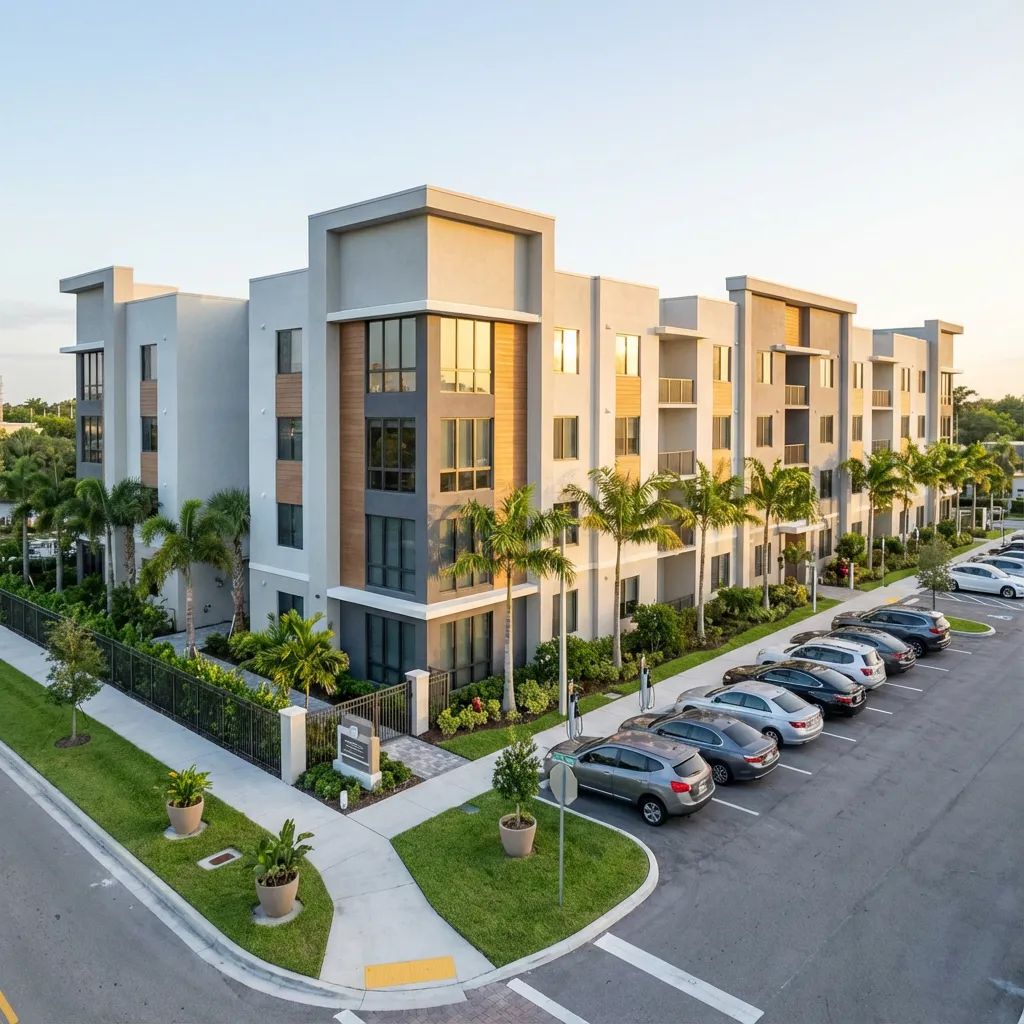
The subject property is a 55-unit multifamily community in Oakland Park — a market with strong underlying rental demand driven by its position within Broward County’s dense urban rental corridor, proximity to Fort Lauderdale, and a workforce tenant base seeking quality housing at mid-market price points. The fundamentals of the location were not the problem. The operation was.
At the time Atlis assumed management, the property was operating with roughly eight to nine vacant units, a delinquency profile that was creating real cash flow instability for the owner, and a maintenance backlog that had been accumulating for months without systematic resolution. Community morale reflected the state of operations — residents who had submitted maintenance requests weeks prior and heard nothing were not renewing. Residents who had experienced inconsistent communication were not paying on time. The property had entered the deterioration cycle that follows extended management failure, where every unaddressed problem creates additional problems.
The investor’s objectives were urgent and clear: stop the bleeding, stabilize the asset, recover NOI, and establish a management foundation capable of sustaining performance without requiring constant ownership intervention. This was not a request for gradual improvement. It was a request for a turnaround.
Hyperlocal Spotlight: Lake Worth Beach, Lake Worth
Lake Worth Beach in Lake Worth represents one of the most active rental submarkets in Palm Beach County for the specific considerations covered in this guide. Current rental rates in Lake Worth Beach range from $1,900–2,700/month for single-family and townhome inventory, with demand driven primarily by corporate transferees, dual-income households, and long-term residents seeking stability in a well-maintained community.
Landlords operating in Lake Worth Beach face the full complexity of Lake Worth's rental environment: HOA compliance requirements, a tenant pool with above-average income and expectation standards, and seasonal demand variation that rewards landlords who price accurately and market professionally. Atlis currently manages properties throughout Lake Worth Beach and the broader Lake Worth submarket, with an average days-to-lease of under 21 days for properly prepared and priced units. Owners in this community who contact Atlis receive a no-obligation rental analysis specific to Lake Worth Beach market conditions — not a county-wide estimate.
The Challenge
The conditions at this property represented a compound problem — each challenge reinforcing the others in ways that made incremental fixes insufficient. A real stabilization required addressing all of them simultaneously rather than sequentially.
High Turnover & Elevated Vacancy
A 15% vacancy rate at a 55-unit property means roughly eight to nine units generating zero income at any given time. In a tight rental market, sustained vacancy at this level is not a demand problem — it is a management problem. Poor maintenance response, communication failures, and a deteriorating community environment were accelerating move-outs and slowing the conversion of new inquiries into signed leases, creating a persistent drag on occupancy that compounded month over month.
Persistent Delinquency Across the Rent Roll
Delinquency at a multifamily property is rarely random. It reflects a combination of tenant placement decisions made without adequate screening, inconsistent enforcement of lease obligations, and a management culture that has normalized late payment over time. Once delinquency becomes embedded in the culture of a property, it is self-reinforcing — tenants who observe that late payment has no consistent consequence have no structural incentive to prioritize on-time payment. Reversing this pattern requires both enforcement action and a cultural reset.
A Backlog of Unresolved Maintenance
Accumulated, unresolved maintenance work orders are one of the clearest indicators of management system failure at a multifamily property. They signal to tenants that their requests do not matter, accelerate physical property deterioration that compounds repair costs over time, and create legal exposure under Florida’s landlord-tenant statute. A backlog does not develop overnight — it develops when intake, routing, and follow-through systems do not exist or are not being used consistently.
No Operational Consistency or Structure
The property had no standardized processes for maintenance coordination, lease enforcement, reporting, or inspections. Decisions were made reactively and inconsistently, producing different outcomes for different tenants in similar situations — a pattern that breeds resentment, reduces accountability, and makes professional management impossible to execute. Without defined processes, every problem becomes an exception handled ad hoc rather than a case managed by a system.
Declining NOI & Owner Confidence
High vacancy, persistent delinquency, elevated maintenance costs from reactive management, and accelerating turnover costs were combining to compress net operating income well below what the asset’s location and fundamentals should have supported. The owner had a property that should have been performing as a stable, income-generating investment and instead required constant attention, produced unpredictable cash flow, and had no clear trajectory toward improvement under the prior management structure.
Professionally Managed vs. Self-Managed: By the Numbers in Palm Beach County
The financial gap between professionally managed and self-managed rental properties in Palm Beach County is measurable, compounding, and consistently underestimated by first-time landlords. Atlis tracks these metrics across its active portfolio.
Annual tenant turnover rate
Maintenance cost overrun (vs. budget)
Security deposit recovery rate
Owner-reported monthly stress level (1–10)
18%
+4%
87%
2.4
41%
+22%
54%
7.1
Higher retention = less vacancy, less leasing cost
Reactive maintenance costs far more than planned upkeep
Documentation discipline determines recoverable deductions
Professional management removes landlord from daily operations
Strategy & Implementation
Atlis implemented a phased stabilization plan that addressed the property’s operational failures at their root causes rather than managing their symptoms. The approach was structured, prioritized, and executed with the urgency the property’s condition required.
1. Technology Infrastructure: Rentvine + AI Maintenance Triage
The first operational priority was replacing the property’s informal, manual management process with a professional technology infrastructure. Rentvine — a full-featured property management platform — was deployed to centralize lease management, rent collection, maintenance work orders, owner reporting, and tenant communication in a single organized system. AI-powered maintenance triage was integrated to receive, categorize, and route all incoming service requests around the clock, eliminating the gap between submission and acknowledgment that had been a primary driver of tenant frustration. This infrastructure did not just improve efficiency — it made the management operation visible, accountable, and auditable in a way that the prior process was not.
2. Full Maintenance Backlog Clearance Within 30 Days
Every open maintenance work order was inventoried, prioritized by urgency and resident impact, and systematically resolved. Vendors were coordinated in parallel rather than sequentially to compress the resolution timeline, and progress was tracked through Rentvine so ownership and management had real-time visibility into clearance status. The entire backlog was resolved within 30 days of Atlis assuming management. This was not merely an operational achievement — it was a visible signal to existing residents that a new standard was in place. The fastest way to change a community’s perception of management is to resolve the requests that the previous manager ignored. Trust is rebuilt through action, not announcements.
3. Lease Enforcement & Delinquency Resolution
Delinquency was addressed through a structured enforcement process applied consistently and without exception across the rent roll. Outstanding balances were formally documented, payment plans were offered where appropriate, and lease non-compliance was addressed through the legal notice process under Florida law for tenants who could not or would not resolve their balances. Simultaneously, communication with all tenants was improved — both to make payment expectations explicit and to ensure that residents understood that the management culture had changed. The combination of consistent enforcement and improved communication changed the delinquency dynamic at the property within the first two lease cycles.
4. Strategic Renewal Management with Rent Increases
As the maintenance backlog cleared, delinquency resolved, and the community environment stabilized, the renewal strategy shifted from defensive to strategic. Renewal offers were structured to reflect current market rates in Oakland Park, and the improved property condition and management experience provided a genuine foundation for supporting rent increases rather than simply requesting them. Tenants who might have declined a rent increase under the prior management conditions — where service was poor and condition was deteriorating — renewed with increases in a stabilized environment where their experience had meaningfully improved. 95% of renewals were completed with rent increases, reflecting both the quality of tenant retention and the market positioning the stabilization had established.
5. Process Standardization: Reporting, Inspections & Coordination
Consistent operational processes were established across every management function. Regular property inspections were scheduled and documented to maintain ongoing visibility into unit and common area condition. Owner reporting was standardized to provide regular, structured updates on occupancy, delinquency, maintenance, and financial performance. Vendor coordination processes were formalized to ensure consistent response standards and cost controls. These systems were not created in anticipation of a future problem — they were the direct replacement for the informal, inconsistent processes that had allowed the property’s problems to develop in the first place. A property that operates on defined processes is a property that cannot easily slide back into the conditions this one was in at intake.
The Results
The stabilization produced measurable, documented improvements across every dimension the owner had identified as a priority. Each result was the outcome of a specific intervention — not a passive market improvement.
15% → 3%
Vacancy Rate
From eight-plus vacant units to near-full occupancy. Reduced vacancy loss translating directly to recovered NOI month over month.
95%
Renewals with Increases
Stabilized conditions supported above-market renewal acceptance. Rent growth achieved without sacrificing occupancy stability.
<48hrs
Maintenance Response
AI triage and structured vendor coordination cut response time from days or weeks to a consistent sub-48-hour standard across all non-emergency requests.
30 days
Full Backlog Cleared
Every accumulated work order resolved within the first month. The single most visible signal to residents that a new management standard had taken hold.
Stable
Community & Resident Morale
Noticeable improvement in resident behavior, community standards, and the overall experience of living at the property — a qualitative shift with direct financial implications.
Results documented for a 55-unit multifamily property in Oakland Park, FL under Atlis Property Management.
“We were honestly in a tough spot with this building. Atlis stepped in and brought order back to the property. They were organized, transparent, and proactive. The difference in tenant behavior and the stability of the building today is unbelievable compared to before.”
— Undisclosed Multifamily Portfolio Investor
Common Mistakes Distressed Multifamily Owners Make
Multifamily properties do not usually arrive at 15% vacancy and chronic delinquency overnight. They get there through a pattern of management decisions — and management inactions — that compound over time. Understanding these patterns is essential to both preventing a repeat and recognizing when a property has entered the deterioration cycle early enough to intervene before it deepens.
Normalizing Delinquency Instead of Enforcing Lease Terms
When late payment goes consistently unaddressed — no formal notices, no escalation, no consequence — it establishes a de facto culture that late payment is acceptable. That culture spreads. Tenants talk, and when word circulates that management does not enforce lease terms, on-time payers have less incentive to remain so. Enforcement is not punitive; it is the structure that makes a multifamily property financially predictable for its owner.
Letting Maintenance Backlogs Accumulate
A backlog of unresolved work orders is not a neutral operational condition — it is an active accelerant of turnover, property deterioration, and legal risk. Every day a work order sits unresolved is another day a tenant is making a mental note about their renewal decision. Beyond the tenant experience dimension, deferred repairs on a 55-unit property become expensive capital events over time. The cost of a preventative repair is almost always a fraction of the cost of the emergency replacement it would have prevented.
Managing Renewals Passively Instead of Strategically
Many multifamily owners treat renewals as a passive event — waiting to see whether a tenant will stay rather than proactively managing the renewal to maximize both retention and rent. In a stabilized asset with improving market conditions, strategic renewal management — pricing renewals to current market rates, initiating outreach early, and leveraging the improved property experience — is one of the highest-return activities in the management calendar. Passive renewal management at a 55-unit property leaves meaningful revenue on the table every single renewal cycle.
Operating Without a Technology Infrastructure
Managing a 55-unit multifamily property with email threads, spreadsheets, and phone calls is not a cost-saving strategy — it is a structural limitation that caps operational quality and creates invisible gaps in accountability. Without a platform like Rentvine, there is no single source of truth for lease status, delinquency, maintenance history, or owner reporting. Decisions get made without complete information, and problems fall through the cracks of a system that was not designed to handle this volume of activity.
Delaying a Management Change When Evidence Is Clear
When a property has elevated vacancy, persistent delinquency, a maintenance backlog, and declining community morale simultaneously, the management structure has failed. Staying with that structure in hopes of gradual improvement is rarely justified by evidence — because the same conditions that produced the failure are still present. Every month of delay is additional vacancy loss, additional delinquency accumulation, and additional physical deterioration that a new management team will have to undo before they can begin driving performance forward.
Who This Applies To
This case study is directly relevant to the following multifamily owners and investors across South Florida:
- Multifamily investors experiencing elevated vacancy in the 10–20% range who suspect the problem is operational rather than a fundamental market issue
- Portfolio owners dealing with chronic delinquency who have not been able to resolve it under their current management structure and need an enforcement-oriented approach implemented consistently
- Owners of properties with accumulated maintenance backlogs who recognize the situation has become a liability but lack the vendor network and operational infrastructure to clear it systematically
- Value-add investors who have acquired a distressed asset and need a stabilization plan executed by a management team experienced with turnaround engagements, not just ongoing management
- Passive investors and syndication operators whose LP obligations require consistent NOI performance and who need a management partner capable of delivering on those commitments through disciplined operations
- Out-of-state multifamily owners with South Florida holdings who have been operating at arm’s length and recognize that the current management situation requires a more capable, more accountable on-the-ground partner
The Oakland Park & Broward County Multifamily Context
Oakland Park sits within the dense Broward County urban rental corridor — a market that has historically attracted strong workforce and mid-market rental demand from the professional and service economy workforce that powers Fort Lauderdale and its surrounding municipalities. The town’s proximity to I-95, the Fort Lauderdale employment core, and the broader Tri-County transportation network has sustained consistent rental demand even through periods of broader market softness. Supply at the workforce housing tier has not kept pace with that demand, meaning well-managed, well-maintained mid-market multifamily properties in Oakland Park have a genuine competitive advantage in both leasing and renewal retention.
This market context is important for understanding what the results in this case study actually represent. A reduction from 15% to 3% vacancy in Oakland Park was not achieved by riding a market wave — it was achieved by fixing the operational reasons qualified renters were not choosing this property and existing tenants were not staying. The demand was there throughout the management failure period. The management failures were preventing the property from capturing it.
Broward County multifamily is also a market with significant variation in property quality and management sophistication at the private ownership level. Many properties in the 30 to 80 unit range are held by individual investors or small family offices that acquired them over a long period and have not updated their management infrastructure to match the expectations of a modern rental market or the requirements of Florida’s landlord-tenant regulatory environment. These properties represent the same operational opportunity this case study documents — strong fundamentals, underperforming operations, and meaningful upside available through professional management and structural improvement.
Atlis Property Management serves multifamily owners across Palm Beach County and Broward County, with expertise in both the ongoing management of stabilized assets and the more complex work of stabilization and operational turnaround. Our technology infrastructure — including Rentvine integration and AI maintenance coordination — is deployed across our managed portfolio to deliver consistent performance at scale.
Landlord Scenario: A Real Palm Beach County Owner's Experience
The situation: A out-of-state investor owned a 3-bedroom single-family home in Palm Beach Gardens. She purchased the property remotely and self-managed from out of state for 14 months. The result: had a tenant who stopped paying in month 8 of a 12-month lease; without a documented late-payment protocol, the eviction cost $6,200 and took 94 days.
What changed: After engaging Atlis Property Management, the team implemented Atlis's rent collection protocol with day-3 late notices and day-10 attorney referral process. The property was brought into compliance with current market standards and operational best practices within 30 days of onboarding.
The outcome: The owner resolved the next late-payment situation in 11 days through the structured escalation process, with no eviction required. The management fee paid for itself within the first lease term, and the owner has since retained Atlis for two additional properties in her portfolio.
Frequently Asked Questions
Key Takeaway
A multifamily property with elevated vacancy, persistent delinquency, and an accumulated maintenance backlog is not a failed investment. It is a property with failed management — and the distinction matters enormously. The asset’s location, its fundamentals, and its potential remain intact. What it needs is an operator who can diagnose the operational failures, implement the systems and processes that replace them, and execute consistently enough that the property reaches the performance level it was always capable of.
Atlis Property Management delivers exactly that kind of engagement — structured, technology-driven, enforcement-oriented, and results-accountable. The numbers from this Oakland Park stabilization are not exceptional by what professional multifamily management should achieve. They are what it looks like when the right management takes over a property that deserved better all along.
Is Your Property Underperforming? Let’s Fix That.
If you own a multifamily property in South Florida dealing with high vacancy, delinquency, or operational instability, Atlis Property Management has the systems, the experience, and the approach to turn it around.
Call or text: 561.473.3664 · Email: info@atlispm.com · Visit: atlispm.com